
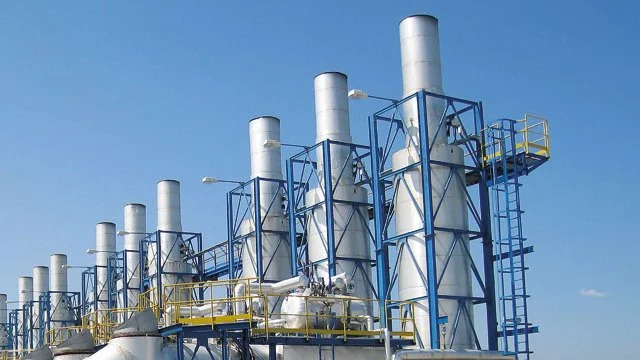
Boiler and ETP exhaust is no longer waste, it is now a new fuel source for the textile industry. Waste Heat to Value is the new wonder of the textile industry in the world today. It is capable of converting the energy or waste heat from boiler and ETP exhaust into energy without wasting it. Previously, boiler smoke, hot air from dryers, or hot water from ETP (Effluent Treatment Plant) was simply lost to the environment. But now the smoke and hot water from that boiler are being converted into an important part of the textile mill’s energy system.
According to a recent market analysis, the global waste heat recovery market is expected to grow from approximately US$6.62 billion to approximately US$12.49 billion by 2033. Meanwhile, Clarke Energy said at World Cogeneration Day- 2025 that textile manufacturing is currently one of the priority sectors for Combined Heat & Power (CHP) solutions. Among the high-energy-intensive industries, textiles are the main driver of this growth in the Asia-Pacific region.
A lot of hot steam and water is used in boilers, stenter machines, and dyeing-washing units in textile factories. But a huge amount of heat and water is lost in the form of waste. Recent studies have shown that recovering this heat through systems such as heat exchanger networks, condensate recovery, and waste gas recovery can save a large amount of energy.
To increase overall energy efficiency, electricity and steam are being generated simultaneously from the exhaust of a gas engine through the use of Cogeneration (CHP) technology at Tamijuddin Textile Mills in Gazipur.
A textile plant in Lucknow, India, recently underwent significant changes to its condensate recovery system. Previously, the condensate recovery rate was only 55%, but now it has increased to more than 75% through the use of digital monitoring systems and special steam-powered condensate pumps.
In a project by Renovis Energy in Europe, an economizer system has been used to reduce boiler flue gas temperature from 230 °C to 40 °C. This heats the boiler feedwater and saves about 20–25% of energy. On the other hand, a dyeing-printing mill in China saved about a quarter of gas and increased production speed by installing a gas-to-water heat exchanger through VRCoolerTech.
Hot water from ETP (Effluent Treatment Plant) is also becoming a source of heat recovery. Some textile mills are using this hot water to reheat through heat exchangers. In some cases, the exhaust heat of the boiler is even being used to neutralize the ETP’s influent to reduce the need for additional fuel.
unveiled their new energy-saving smoke filtration and heat recovery solutions at the ITMA ASIA 2025 exhibition in Spain. The new system filters and recovers heat from hot fumes and exhaust gases emitted from stenter and dryer machines, thereby reducing fuel consumption and carbon footprint.
Industries are wasting a large portion of their waste heat. The International Energy & Environmental Change Platform (IEECP) 2025 report says that both technological and policy changes are needed to prevent heat loss. According to the Low-Carbon Thermal Energy Roadmap for the Textile Industry-2025, jointly published by Apparel Impact and the Global Energy Initiative, waste heat recovery will be one of the key drivers of decarbonization in the textile sector.
-

-

-

-

