
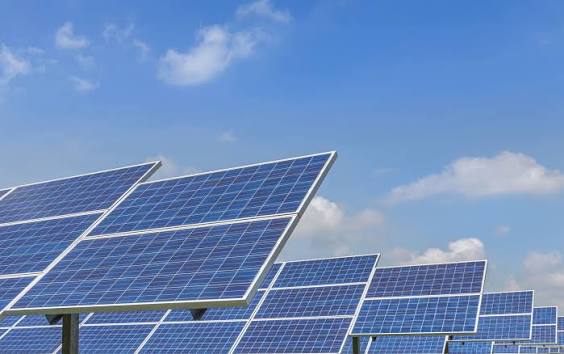
Amid growing energy uncertainty and rising fuel costs, industrial manufacturers in Bangladesh are rapidly shifting toward rooftop solar power as a strategic solution to ensure operational continuity and sustainability.
Leading textile and apparel manufacturers are increasingly adopting solar energy to reduce dependence on grid electricity and captive power generation, particularly as gas supply constraints and global energy disruptions intensify.
Rising Group, one of the country’s top composite garment manufacturers, has installed a 9 MW rooftop solar system, now supplying around 15% of its total electricity demand. This transition has allowed the company to significantly reduce reliance on gas-based captive power.
Similarly, Pacific Jeans has deployed a 7 MW rooftop solar installation, meeting approximately 12% of its energy needs. According to Managing Director Syed Mohammad Tanvir, the investment has strengthened energy resilience while supporting sustainability goals.
Industry-wide Shift Gains Momentum
These initiatives reflect a broader trend across Bangladesh’s industrial sector. More than 500 MW of rooftop solar capacity has already been installed in factories nationwide, with another 500 MW expected to come online within the year.
This rapid expansion is driven by multiple factors:
- Persistent gas shortages
- Unreliable grid electricity supply
- Rising energy costs
- Increasing pressure from global brands to reduce carbon emissions
The ongoing geopolitical tensions in the Middle East have further heightened concerns, particularly due to potential disruptions in fuel shipments through the Strait of Hormuz, a critical route for LNG and oil imports into Bangladesh.
A Cost-Effective and Predictable Energy Solution
While rooftop solar cannot fully meet industrial energy demands, it provides a reliable supplementary source, typically covering 15–20% of electricity needs and enabling factories to maintain operations for several hours during outages.
Industry experts emphasize its financial advantages. The cost of solar installation has dropped significantly from approximately BDT 55 million per MW two years ago to around BDT 35 million today. Over a 20-25-year lifecycle, solar electricity costs less than BDT 3.5 per unit, compared to nearly BDT 9.7 per unit for grid power.


Return on investment is also attractive, with most projects achieving payback within four years.
Policy Support and Growing Adoption
The introduction of net metering in 2018 has been a key enabler, allowing factories to export excess solar power to the national grid and offset electricity bills. The recent removal of capacity limits on rooftop installations has further accelerated adoption.
Major industrial groups including Youngone, DBL Group, BSRM, Meghna Group, and Akij Group have already implemented rooftop solar systems, with many more projects currently under development.
Sustainability Pressure from Global Buyers
Export-oriented industries, particularly textiles and garments, are under increasing pressure from international brands to reduce carbon footprints and transition toward renewable energy.
Industry estimates suggest that factories supplying to global brands alone may require up to 2,000 MW of renewable energy capacity to meet net-zero targets. Overall industrial demand could reach 4,000 MW.
The Road Ahead
Despite its rapid growth, rooftop solar alone cannot fully meet industrial energy needs due to space limitations. Experts suggest that scaling renewable energy will require investment beyond factory rooftops, including utility-scale solar projects and dedicated industrial energy parks.
Still, rooftop solar is emerging as a critical component of Bangladesh’s energy transition—offering a more stable, cost-effective, and sustainable pathway for manufacturers navigating a volatile global energy landscape.


