
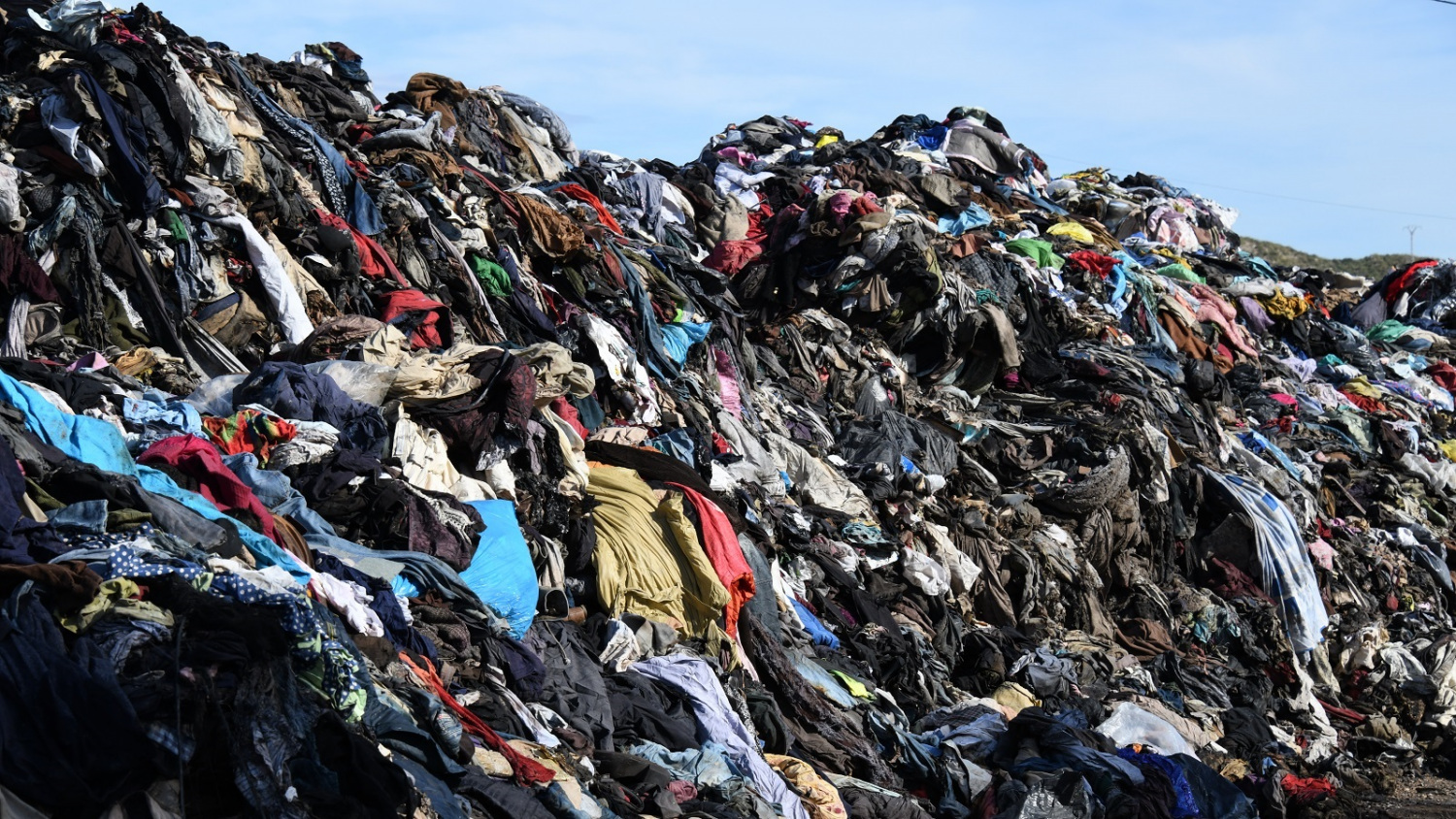
Textile or clothing industry is one of the fastest growing industries. The amount of textile waste worldwide is increasing day by day. It is never possible to reduce the amount of waste if recycling is seen as the main solution. Rather, if recycling is seen as the last step, it is possible to find a sustainable solution by reducing waste production and forming a circular system. Much of the world’s high level of textile waste is being sold locally or abroad or dumped, damaging the environment. It is not possible to prevent waste production by relying only on recycling.
The main reason for the increase in waste is low-cost fast fashion, high production, and a culture of quick wear and tear. According to research, textile waste is increasing rapidly because production is high and the clothes are not being used in the long term. Millions of tons of pre-consumer textile waste are generated every year. But a very small part is effectively recycled (5-7%). Most of the waste is downcycled (mattresses, cushions, etc.), or sent abroad.
Textile industry is working more on “linear” model:
Most of the current textile industry operates on “take-make-waste” or linear model (production → use → waste). As a result, many clothes and fabrics become waste in the first stage and are later recycled. This model increases waste.
Relying only on recycling of textile waste does not reduce the problem but increases it:
Along with the huge amount of clothing and fabrics produced worldwide every year, a lot of it becomes waste. Most textile fabrics such as mixed fibres or polyester are not suitable for easy recycling. Research and industry analysis have shown that about 92 million tons of clothing waste are generated worldwide every year and very little is recycled; most of the rest goes to landfill. Textile waste is a major problem among the major problems of Bangladesh. The country generates about 577,000 metric tons of textile waste.
This proves that relying only on recycling will increase waste production, that is, it is not possible to deal with it through overproduction and rapid wear. Recycling does not reduce waste production; it only reuses the materials used.
A fully circular system includes ‘design-to-recycle’ – In a truly circular system, recycling is the last step, i.e. first production needs to be reduced, then recycling. Increasing production based solely on recycling requires large investments to increase the quality of recycling, which is detrimental.


Limited recycling efficiency –
Only about 25% of textile waste is recycled worldwide; and most of it ends up in landfills or dumping. Without down-cycling (making low-quality products), textile recycling is very ineffective.
“Increasing recycling is enough; it has the biggest positive impact on the environment” but the saying is not entirely true. Because – Recycling helps protect the environment because it reduces the use of virgin (new) materials, saves water and energy. Recycling helps reduce the carbon footprint, reduces the production of new raw materials. This is true. If it is not effective in preventing waste production, then energy, labor and money costs will increase and there will be environmental pressure at the earlier stages of the circular system. That is, it is a step, not the final solution.
The statement “As recycling technology improves, it will be more effective in the future” is also partly true. Because – Waste production is still increasing due to the lack of a real circular policy.
“Recycling creates new industries and jobs” is also partly true. Because – Having jobs and economic opportunities does not mean that it is a core initiative. If waste reduction and reuse are not given great importance, waste production will increase further. Recycling will then be under excessive pressure. It will not reduce environmental damage.
If the circular system, production-reduction and reuse are emphasized, a sustainable solution to the textile waste problem will be possible.
-

-

-

-


