
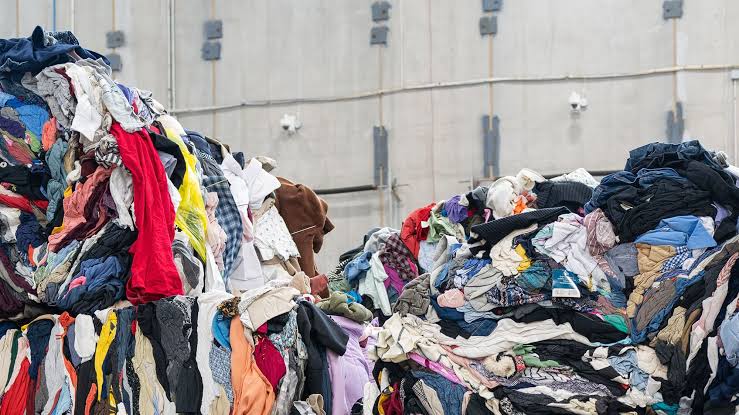
Clothing does not necessarily reach the end of its life in the market where it was originally sold. A garment bought in Europe can enter the second-hand trade, cross borders and eventually reach a market thousands of kilometres away. The environmental and economic pressures linked to that garment may then fall on communities far removed from the brand and consumer who first purchased it.
The newly launched Apparel Recovery Coalition (ARC) is looking at this gap in the global textile system.
The Or Foundation, adidas, BESTSELLER, H&M Group and Inditex have joined the coalition to explore how producer responsibility systems could help support reuse, upcycling, recycling and responsible waste management in countries receiving large volumes of second-hand clothing.
Building a producer responsibility model for exported textiles
Over the next two years, ARC, with support from Circle Economy, will develop and test a producer responsibility blueprint that takes international post-consumer textile flows into account.
The initiative will involve brands, producer responsibility organisations (PROs), textile sorters, recyclers, policymakers and communities affected by clothing exports.
The need for such an approach reflects the way used clothing moves through global markets. Producer responsibility systems are generally connected to the country or market where products are first sold. Post-consumer textiles, meanwhile, can move across borders before being reused, repaired, recycled or discarded.
The scale of these flows is significant. The European Environment Agency estimates that around 1.4 million metric tons of used textiles are exported from the European Union each year, mainly to countries in Africa and Asia.
Ghana becomes ARC’s first demonstration market
ARC was launched at Kantamanto Market in Accra, Ghana, one of the world’s major centres for second-hand clothing reuse, repair and upcycling.
The Or Foundation estimates that around 25 million garments are recirculated through the market every month. The market supports an extensive network of traders, repairers, upcyclers and other workers whose livelihoods are linked to the second-hand clothing trade.
Ghana will host ARC’s first demonstration project. The coalition will examine how producer responsibility contributions could support the country’s existing circular textile ecosystem rather than creating a separate system.
The Or Foundation will continue work across Accra, including improvements to infrastructure at Kantamanto Market, environmental remediation and training programmes.
ARC plans to establish at least one additional demonstration project in another country that receives significant volumes of second-hand apparel.
Brands to provide voluntary funding
From 2026 to 2027, adidas, BESTSELLER, H&M Group and Inditex will make voluntary contributions to support circular economy activities in second-hand markets.
The projects are intended to generate practical evidence on how producer responsibility could work when clothing moves beyond the markets where it was originally sold.
For the wider textile industry, the outcome could help clarify how brands, PROs and policymakers can share responsibility for garments that continue moving through international second-hand markets long after their first sale.
The coalition’s findings are expected to inform future approaches to post-consumer textile management and provide a basis for further discussion around producer responsibility across global clothing supply chains.
-

-

-

-


