
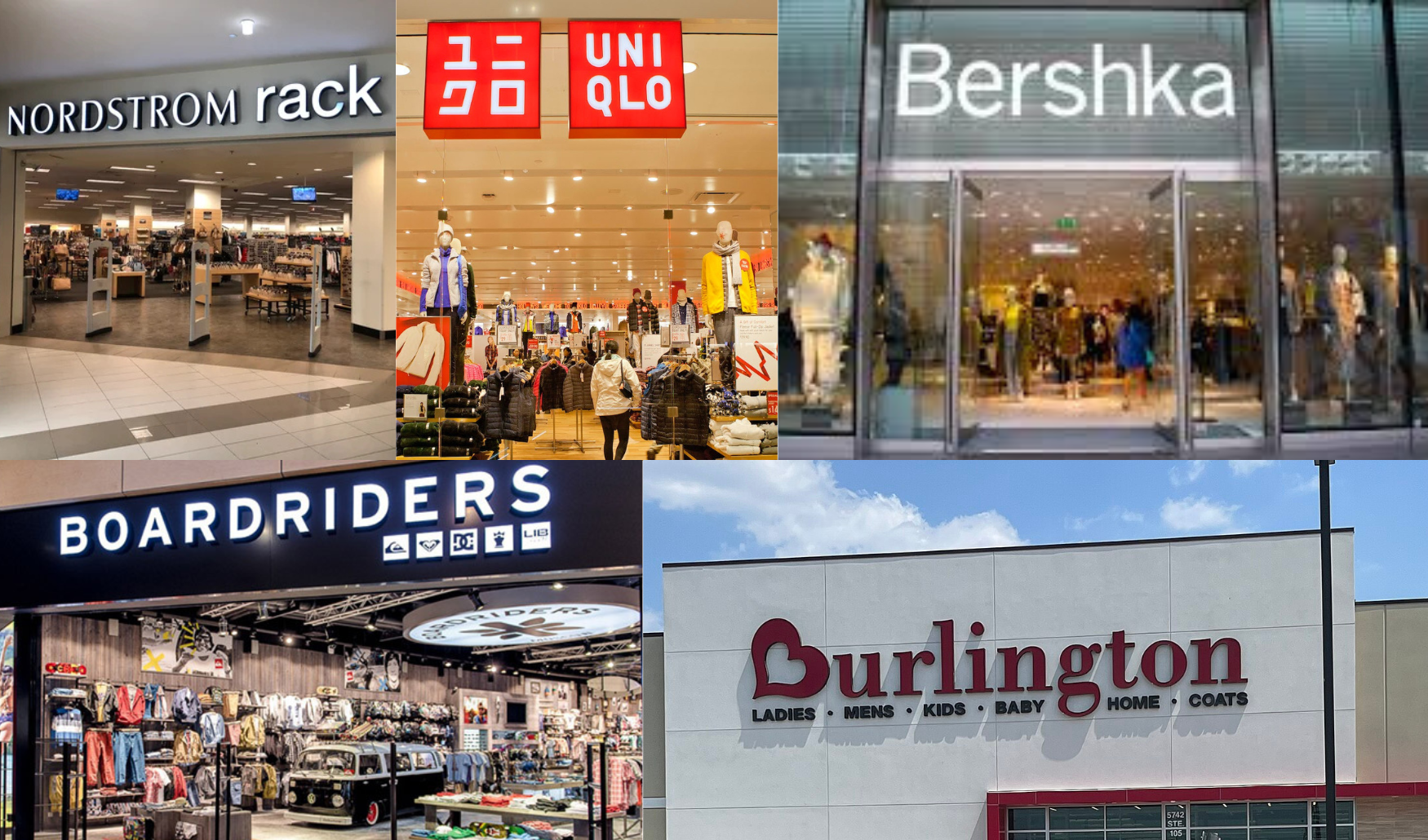
At the start of 2026, the US retail industry is expected to see another wave of store closures. Still, the picture is not uniformly negative. Several retailers are moving ahead with measured expansion plans, driven by steady consumer demand, off-price momentum, and long-term brand strategies. Rather than broad-based growth, the year ahead points to targeted openings in specific formats, regions, and customer segments.
Below is a look at the retailers planning to expand their physical presence in the US over the coming year.
Nordstrom Rack expands its off-price footprint
Nordstrom continues to lean into its off-price business, with at least 14 new Nordstrom Rack locations planned for 2026 across 10 states. While opening dates have not yet been confirmed, reported target markets include Florida, California, Louisiana, Tennessee, Massachusetts, New Jersey, Washington, Virginia, Ohio, and Maryland.


The expansion follows a $6.25 billion buyout involving the Nordstrom family and Mexico’s El Puerto de Liverpool, which took the company private earlier this year. Nordstrom Rack plays a central role in the group’s strategy, offering discounted merchandise sourced from unsold inventory and special purchases. Growth has been strongest in suburban areas and shopping centres, where value-focused formats continue to attract traffic.
Uniqlo pushes closer to its North American goal
Uniqlo plans to open 11 new US stores in 2026, including two in Chicago, four in New York, and one in San Francisco. The Japanese retailer views the upcoming openings as part of a long-term plan rather than rapid expansion.


US CEO Fuminori Adachi described the strategy as “thoughtful growth,” focused on choosing locations carefully and reflecting customer feedback at each store. The additions will move Uniqlo closer to its goal of operating 200 stores across North America by 2027. At present, the brand has 76 locations in the US and 32 in Canada.
Pacsun reaffirms commitment to physical stores
Pacsun is doubling down on brick-and-mortar after reporting double-digit growth across its US store network in 2025. For the first time in 18 years, the youth-focused retailer plans to increase its domestic store count, with 20 to 35 new locations targeted over the next three years. Nine leases are already signed for 2026.


Alongside its US plans, Pacsun is preparing for international expansion. Through a partnership with Majid Al Futtaim, the brand aims to open 20 stores across the Middle East within five years. Its first international store is scheduled to open in Dubai in spring 2026.
Boardriders returns to the US market
Boardriders is set to reopen in the US following a rollout across Europe. Backed by parent company Authentic Brands Group, the surf brand will relaunch its Hawaiian store as its US flagship.


The location will feature a curated mix of brands, including Quiksilver and Billabong. Volcom, a sister brand, will also return to Hawaii through a collaboration with local retailer Cycle City. The move signals a renewed focus on brand-led physical retail tied closely to lifestyle and location.
Bershka enters US physical retail
Bershka will open its first physical stores in the US in 2026, marking a new stage in Inditex’s regional strategy. Two locations are planned for Miami, making Bershka the third Inditex brand with brick-and-mortar operations in the country.


The decision builds on strong online performance in the US. Inditex CEO Oscar García Maceiras has described the market as highly relevant, while also noting that the group’s market share remains relatively low. This leaves room for growth that depends more on execution than overall market conditions.
Burlington accelerates store openings
Burlington is preparing for a faster pace of expansion after improved results in recent quarters. The off-price retailer raised its 2025 outlook to 104 net new stores and set a target of at least 110 additional locations for 2026.


Many of the new stores will take over large retail spaces previously occupied by chains such as Joann Fabrics and Bed Bath & Beyond. Burlington is aiming for a long-term store count of 2,000, supported by a new distribution centre in the Southeast, scheduled to open next year. Store refresh efforts, focused on improving the shopping experience, will also continue.
CEO Michael O’Sullivan has said the company’s pipeline supports sustained growth beyond 2026, with confidence extending into 2027 and later years.
While store closures will remain part of the retail landscape in 2026, the expansion plans outlined above point to a more selective form of growth. Off-price formats, value-driven concepts, and brands with clear positioning continue to attract investment. For these retailers, physical stores still play a meaningful role, especially when aligned with location strategy, supply chain support, and customer demand.
-

-

-

-

