
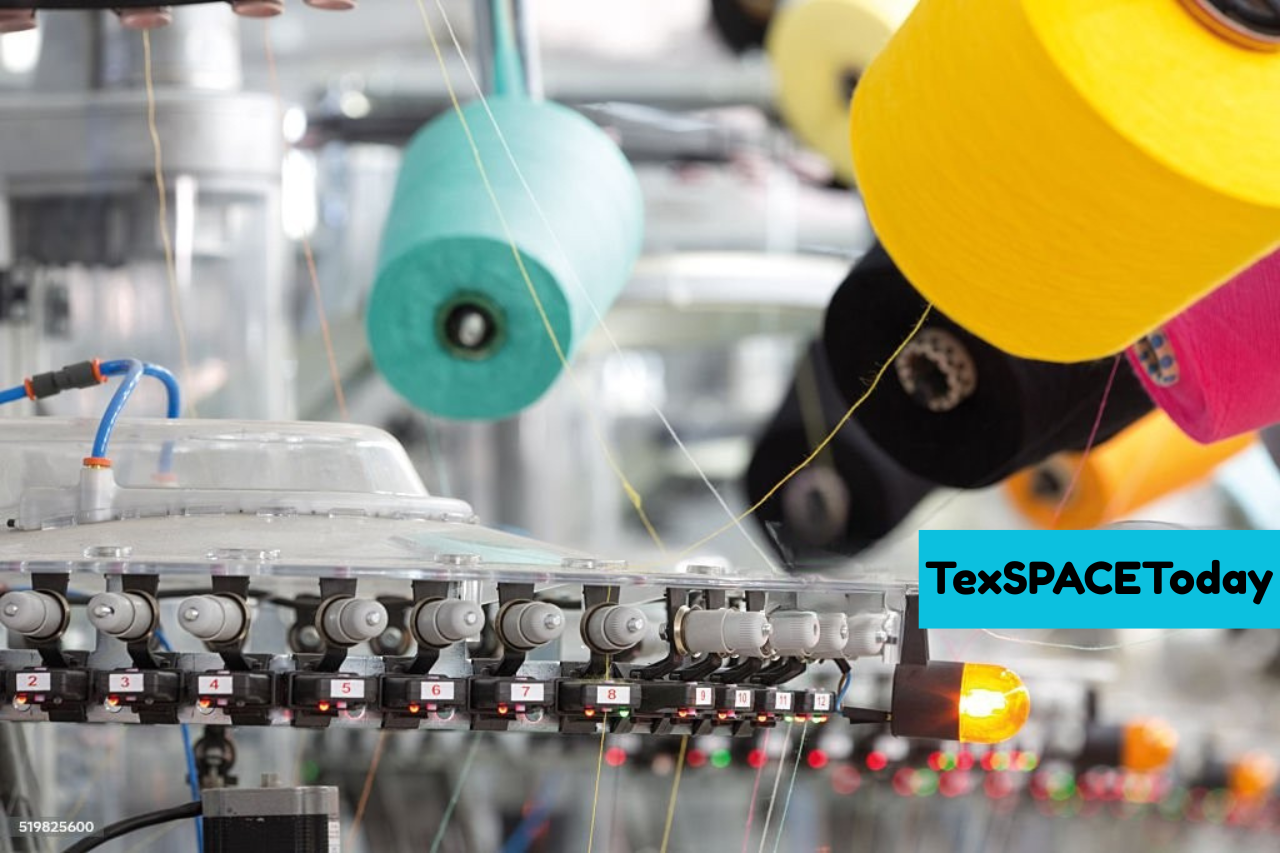
In textile manufacturing, attention to detail doesn’t just happen by accident—it is engineered. When a loom misplaces a fibre by a fraction of a millimeter, the effect can cascade into dimensional errors, quality defects and waste. If you accept variations of several hundred microns as “normal,” you risk heavy rework, returns or margin erosion. This article highlights how machine precision matters, outlines the current gap in the industry, and describes some of the recent developments helping mills move toward true micron-level control.
Why precision matters in textiles
Fabric and garment manufacturing involves many steps—spinning, weaving or knitting, finishing, cutting, sewing. Each of these processes demands exact tolerances if you want consistent output. For example:
- In weaving or knitting, yarn tension, warp/weft alignment and loop geometry must be controlled very tightly, or you’ll get batch variation or fabric defects.
- In cutting and sewing, if the garment pattern is based on fabric that has shifted, stretched or relaxed, you end up with misfits and wasted material.
- At the inspection and finishing stage, measuring and controlling shrinkage, colour alignment and seam placement all require machines and sensors tuned to fine levels.
In other words: when you manufacture by the metre for hundreds of thousands of units, even a small deviation (say 0.2 mm in fabric width) becomes significant. That is why textile machines must “think in microns”.
Current state and the precision gap
The larger textile-machinery market is growing steadily. One estimate puts the global textile machinery market at USD 31.10 billion in 2025 and projecting roughly USD 40.11 billion by 2030 (CAGR ~5.2%) for traditional machines. Meanwhile, the “precision textile machinery” sub-market is estimated at USD 42.3 billion in 2023 with a forecast of USD 61.8 billion by 2032 (CAGR ~4.3%). These figures indicate rising investment in higher-precision equipment.
Yet even with investment, the industry faces gaps:
- Many older textile machines were designed for high throughput rather than fine tolerance, so variations in tension, alignment or loop structure persist.
- Quality control systems may still rely on visual or manual inspection rather than high-resolution sensors, meaning defect detection and deviation control happen late or after waste has occurred.
- Supply chains and workforce skills are variable across regions, meaning even high-cost machines may not be operated to their full precision potential.
- For cutting, sewing and finishing, the interface between machines, operators and material behaviour (e.g., relaxation, shrinkage) remains difficult to predict precisely.
Because of this gap, manufacturers still report fabric width changes, drift in knitting stitch length, misalignment in woven patterns and higher-than-acceptable reject rates. Each of these is a precision shortfall.
Developments helping raise precision
Several new developments are helping textile manufacturers tighten tolerances. Here are a few:
- Sensor-based feedback and digital twin methods: Advanced machines now include real-time sensors measuring tension, yarn position, loop geometry. These feed into control loops and digital twins that adjust machine parameters on the fly. For example, research into machine vision for fabric defect detection (such as a Sylvester-matrix-based algorithm achieving ~95.8% precision) illustrates how sensing matters.
- Automation and robotics in sewing/cutting: A recent study on an automated seam-folding and sewing machine showed cycle time dropping from 117 s to 33 s per piece, thanks to precise folding machinery and monitoring. While this is garment finishing rather than primary textile production, it demonstrates the value of precision automation in reducing variation.
- Deep learning and robotics in knitting: An April 2025 study used deep learning to help robots reverse-engineer knit patterns and control robotic knitting systems, tackling complex yarn structures and stitch types. When robots manipulate yarn at this fine scale, precision is paramount.
- Technology for finishing and dyeing: As fabrics go through finishing and chemical treatments, precision in temperature, flow, time and mechanical handling all matter. Some industry articles note that precision equipment in finishing leads to fewer rejects and better repeatability of high-performance fabrics.
- Regional investment and machinery upgrades: Asia-Pacific, for instance, dominates the precision textile machinery market (USD 18.6 billion in 2023) with expected growth. This suggests more manufacturers in that region are investing in the equipment needed for tighter control.
Implications for manufacturers and suppliers
For textile mills, gear suppliers and OEMs, the following practical implications emerge:
- Precision must be treated as a competitive metric, not just throughput or cost. Being able to deliver tighter tolerances means fewer defects, less waste and higher quality.
- When purchasing machinery, specifications should include control metrics (e.g., yarn tension variation in ± X µm, loop length variation ± Y µm) and not just speed or capacity.
- Operators and maintenance teams need training so machines run at designed tolerances; machines alone don’t guarantee precision.
- Data from sensors and machines must be collected and analyzed, drifts in behavior (tension, vibrations, and alignment) often signal precision loss before defects appear.
- In the supply chain, precision matters upstream (machines, raw materials) and downstream (cutting, sewing, finishing). A fabric produced at fine tolerance still needs the rest of the chain calibrated for matching precision.
- Sustainability is linked: precision means less waste, fewer rejects and more consistent quality, which reduces material use, rework and energy.
Challenges to raising precision
There are obstacles to achieving micron-level precision in textile manufacturing:
- Capital cost: High-precision machines with advanced sensors, controls and automation cost significantly more than legacy machines. That can be a barrier, especially in regions with tight margins.
- Skill gap: Running and maintaining high-precision equipment demands higher technical skill sets—many mills are still catching up.
- Material variability: Raw yarns vary in tension, diameter, moisture content—these upstream variabilities make precision more difficult downstream.
- Integration across processes: Precision in weaving means little if cutting or sewing networks introduce larger tolerance errors. Coordination across machines and departments is required.
- Scale vs precision trade-off: When high volume is required, operators sometimes sacrifice precision for speed, leading to accumulated variations.
Precision in textile manufacturing matters more than ever. As consumers demand higher quality, brands insist on tighter tolerances and sustainability becomes a non-negotiable, textile machines must be designed and operated with micron-level control in mind. Upgrading equipment is necessary, but equally important is training, data-driven monitoring, and process integration across the chain. Mills that treat precision as a measurable asset not just a quality aspiration will be better positioned to manage variation, reduce waste and compete on performance.
If your facility still treats “acceptable tolerance” as 1-2 mm variation in fabric width or loop length, it’s time to ask: what happens when that variation is 0.2 mm instead? That’s the level at which textile machines should be thinking and operating in order to meet the challenges and opportunities ahead.
-

-

-

-

