
As global textile manufacturers confront intensifying water scarcity, rising treatment costs, and stricter buyer compliance requirements, water management is no longer just an environmental obligation. It is rapidly becoming a business-critical priority influencing cost efficiency, sourcing decisions, and long-term operational resilience.
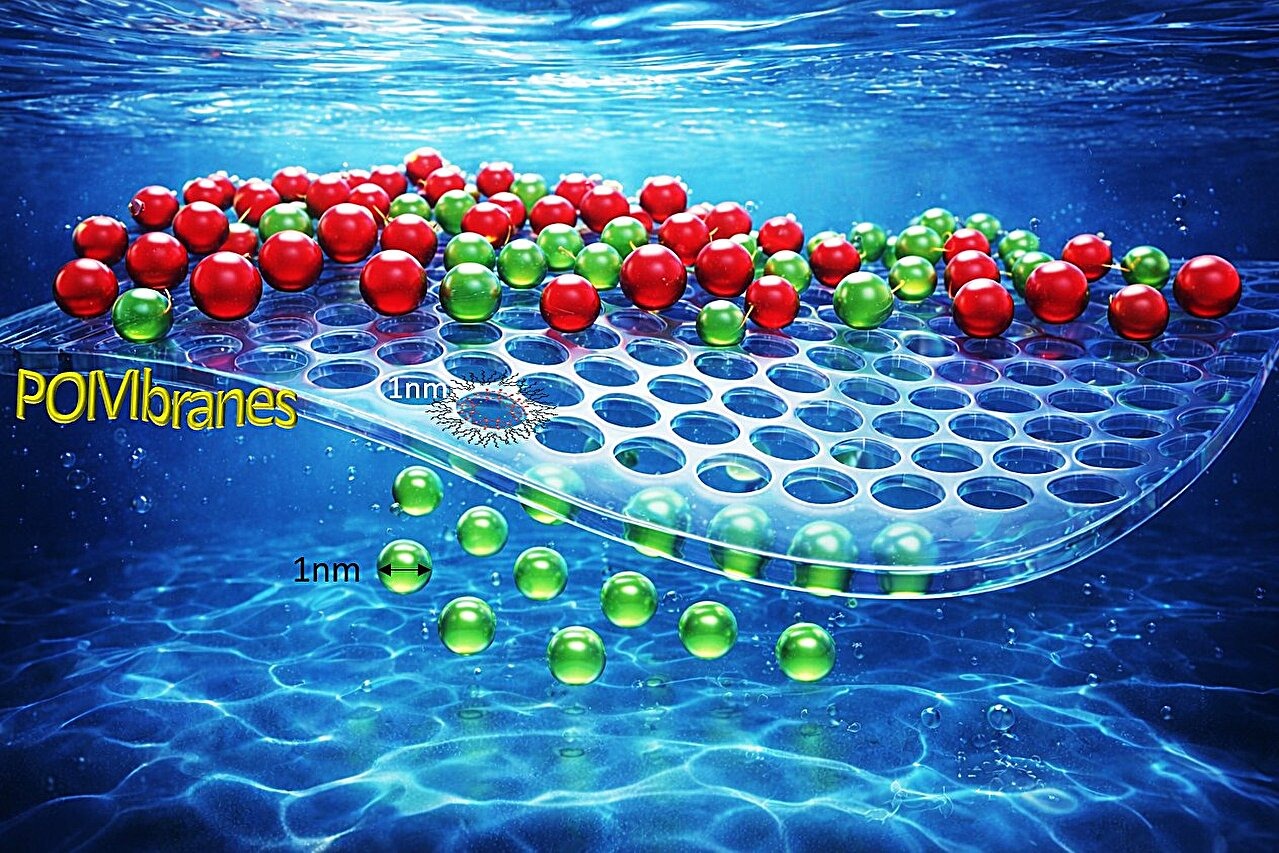
In this context, a new class of nature-inspired filtration materials known as POMbranes is emerging as a potentially transformative solution for industrial water recycling, particularly in water-intensive textile wet processing.
A breakthrough at the molecular level
According to the Journal of the American Chemical Society study titled Large-Area Supramolecular Crystalline Thin Films of Polyoxometalates with Controlled 1-nm Pores Enabling Ultra-Selective Molecular Transport, researchers engineered “POMbranes” using polyoxometalate molecular clusters that mimic biological water channels to achieve highly selective separation of pollutants in water treatment applications.
Unlike conventional membranes that rely mainly on size exclusion, POMbranes operate through molecular-level selectivity, enabling consistent water quality even when chemical loads fluctuate. This capability directly addresses one of the textile industry’s biggest challenges: maintaining stable recycled water quality for dyeing and finishing processes.
Why water recycling is now strategic for textiles
The textile industry remains among the world’s most water-intensive sectors. Dyeing and finishing processes alone account for 60–70% of total water consumption, with average use ranging from 80 to 100 cubic metres per tonne of fabric, according to World Bank industrial water assessments.
At the same time, wastewater treatment costs are climbing. Factory audits indicate that 8–15% of total operating expenditure in wet processing units is now linked to effluent treatment and associated energy use, based on International Finance Corporation assessments. Rising electricity tariffs, increasing chemical prices, and stricter discharge regulations are further intensifying cost pressure on manufacturers.
In Bangladesh, where groundwater extraction already exceeds natural recharge in several textile clusters, water availability is increasingly becoming a structural production risk rather than a short-term compliance issue.
Limits of conventional treatment systems
Most textile factories rely on treatment systems originally designed for regulatory discharge compliance, not high-quality water reuse. Conventional configurations combining biological treatment, ultrafiltration, and reverse osmosis are effective but energy-intensive, sensitive to feedwater variability, and prone to membrane fouling.
As a result, many factories struggle to exceed 30–40% water reuse, even as buyers push for higher reuse rates. Inconsistent recycled water quality often restricts its use in colour-critical dyeing operations, limiting the effectiveness of circular water strategies.
What makes POMbranes different
POMbranes introduce a fundamentally different filtration approach. Built from molecular clusters with uniform, permanent pores of approximately one nanometre, the membranes create precisely controlled separation pathways.
Unlike traditional polymer membranes with irregular pore structures, POMbranes force all molecules through engineered nano-channels. This enables superior selectivity between similarly sized compounds and significantly improves contaminant rejection. Early laboratory and pilot-scale studies indicate up to tenfold improvement in separation efficiency compared with conventional membrane materials.
Equally important for textile operations, POMbranes demonstrate strong chemical stability across wide pH ranges, making them suitable for dyeing, washing, and finishing processes where chemical conditions frequently fluctuate.
Tangible business impact for manufacturers
From a commercial perspective, advanced selective membranes offer clear operational benefits. Industry modelling suggests that integrating high-efficiency membranes into wastewater treatment systems can deliver:
- 10–20% reduction in treatment-related energy consumption
- 5–12% reduction in total wet-processing cost per kilogram of fabric
- Lower chemical dosing requirements
- Reduced sludge generation and disposal costs
For large composite mills processing 1,000–1,500 cubic metres of wastewater per day, these improvements translate into substantial annual cost savings. More importantly, improved recycled water stability reduces dyeing interruptions and shade variation risks, supporting consistent production quality.
Buyer expectations and sourcing security
Water performance is increasingly shaping global sourcing decisions. Leading fashion brands now assess suppliers based on water reuse ratios, treatment efficiency, and exposure to local water stress, particularly in high-risk regions.
Brand disclosures indicate that factories in water-stressed areas are expected to achieve 50–60% water reuse while maintaining low energy intensity per cubic metre treated. Technologies such as POMbranes directly support these requirements by delivering reliable recycled water quality suitable for continuous dyeing operations.
Factories that demonstrate advanced water stewardship are also better positioned to secure long-term sourcing commitments as brands rationalise supplier bases.
Environmental and carbon benefits
The environmental gains from advanced membrane adoption are equally compelling. When integrated into circular water systems, next-generation membranes can enable:
- 30–50% reduction in freshwater extraction
- Up to 90% colour removal efficiency
- Significant reduction in chemical oxygen demand (COD) before discharge
In Bangladesh, large-scale water reuse projects have already demonstrated annual freshwater savings exceeding 400,000 cubic metres per factory, according to industry project data. Wider adoption of higher-efficiency membranes could multiply these gains across major textile hubs.
Water efficiency is also closely linked to energy and carbon performance. Wastewater treatment can account for 10–15% of total factory electricity use. By reducing reliance on energy-intensive reverse osmosis and evaporation stages, POMbranes could support 8–12% reductions in treatment-related carbon emissions, strengthening alignment with global brands’ Scope 3 climate targets.
A future competitiveness lever
Although POMbranes are still at an early commercialisation stage, with challenges around scaling and long-term industrial validation, momentum is building. Experiment deployments and growing industry interest suggest that commercial adoption could accelerate over the next few years.
As water tariffs rise and regulations tighten, early adopters of next-generation water technologies are likely to gain lasting advantages like lower operating costs, reduced compliance risk, stronger sustainability credentials, and greater resilience to water scarcity.
The emergence of nature-inspired POMbranes signals a broader shift in textile manufacturing from compliance-driven wastewater treatment to performance-driven circular water management. If successfully scaled, this technology could help the global textile industry decouple production growth from water consumption, strengthening both environmental stewardship and long-term competitiveness in an increasingly resource-constrained world.


