
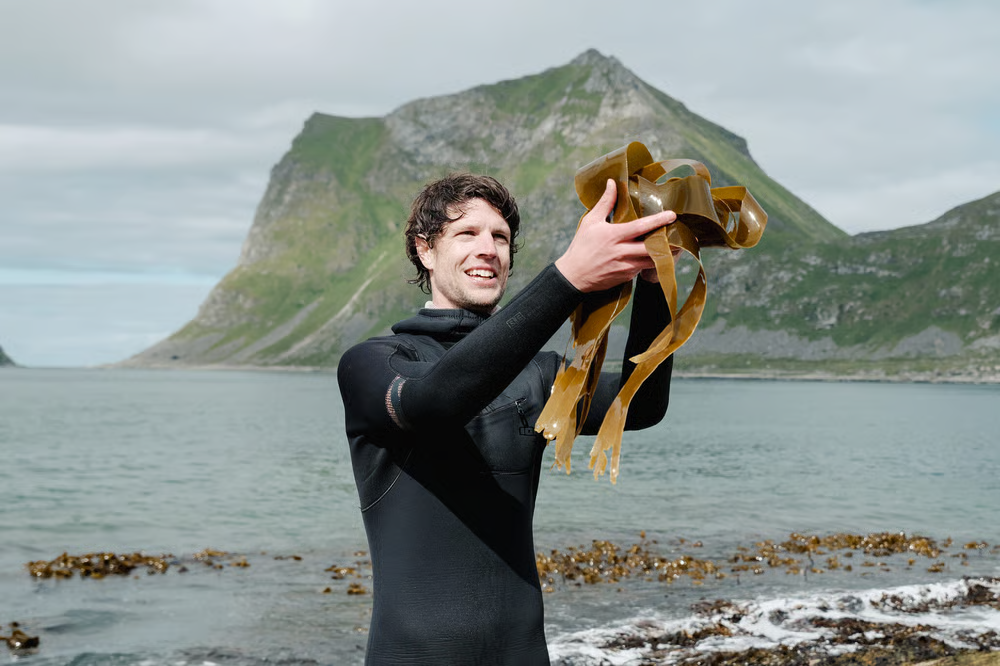
Norwegian outdoor clothing brand Norrøna has partnered with Australian materials company Uluu to develop a seaweed-based fiber for performance apparel. The project aims to create an alternative to conventional plastic-based synthetic fibers, with the eventual goal of using the material in Norrøna products.
The partnership focuses on developing a bio-based material that can meet the durability and performance requirements of outdoor clothing while reducing dependence on fossil-based materials.
Uluu uses seaweed to produce polyhydroxyalkanoate (PHA), a natural polymer that can serve as an alternative to conventional plastics. The production process involves fermenting sugars extracted from seaweed in saltwater to create the material, which can then be processed into fibers.
Seaweed offers several potential advantages as a raw material. It can be harvested without agricultural land and requires minimal freshwater and fertilizer. This could reduce pressure on land and freshwater resources compared with some conventional raw materials.
The resulting material is designed to biodegrade without releasing persistent plastic fibers into the environment. However, its environmental performance will need to be verified through appropriate testing.
Norrøna and Uluu have already spun fibers using seaweed-derived Uluu PHA as a core ingredient. Norrøna will now test the material for durability and other performance requirements before considering its use in commercial products.
Performance will be a major factor in determining its commercial potential. Outdoor apparel requires materials that can withstand demanding conditions. Strength, abrasion resistance, flexibility and durability will be important evaluation criteria.
Jørgen Jørgensen, CEO and fourth-generation owner of Norrøna, said the company was bringing its outdoor product development experience into the early stages of material innovation to help shape fibers around performance requirements.
Brad Boren, Director of innovation and sustainability Norrøna, said the company would test the material against outdoor performance requirements and share its findings with Uluu to support further development.The project is part of Norrøna’s Responsibility Roadmap, which includes a target to source 100% of its raw materials from certified responsible sources. The company already uses Global Recycled Standard (GRS)-certified recycled polyester and nylon in its products.


