
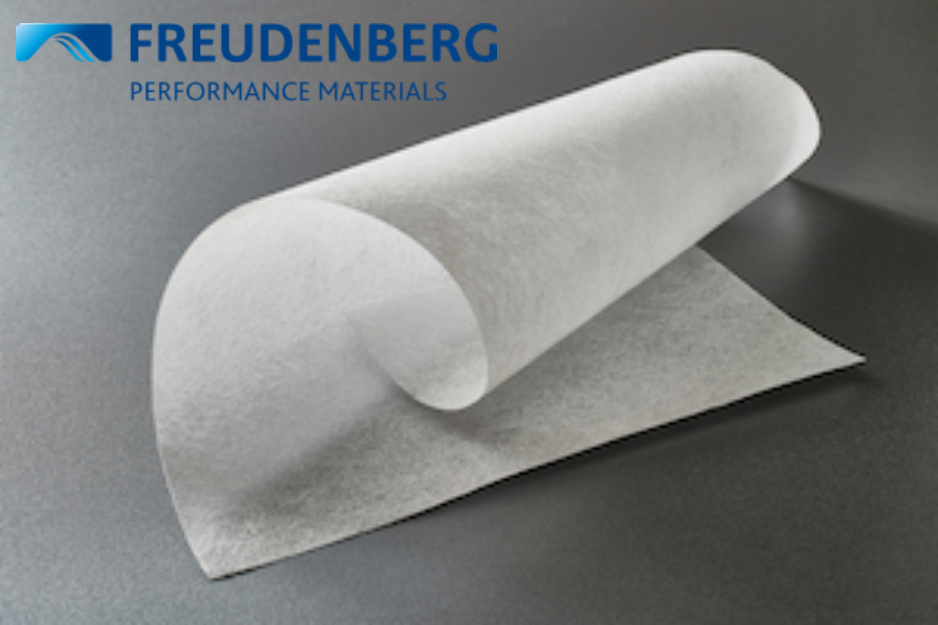
Freudenberg has developed a new generation of sustainable nonwovens by combining the natural qualities of wood pulp with the strength of polylactic acid (PLA). The material is entirely bio-based and produced without any chemical binders, marking a step forward in developing more responsible textile and packaging solutions.
The product takes advantage of wood pulp’s ability to absorb water and biodegrade naturally while maintaining the durability and thermal sealability of PLA. This balance is achieved through the wetlaid process—a production method that allows both polymeric and non-polymeric materials to be mixed. It differs from the conventional spunlaid process, which relies only on polymer-based raw materials.
Versatile applications across industries
The new PLA and wood pulp wetlaid nonwovens are suitable for various applications in horticulture, packaging, filtration, and healthcare.
In horticulture, they support better water absorption, root development, and controlled degradation, making them well-suited for short-, medium-, and long-term plant propagation systems. They can be used in vegetable growing, flower cultivation, and forestry. The new product line expands Freudenberg’s existing range of plant propagation materials made with combinations of wood pulp, polypropylene, polyester, and viscose.
In packaging, the material offers a sustainable alternative to plastic-based products, such as bio-based desiccant bags that can replace traditional synthetic ones.
In healthcare and apparel, PLA-based wetlaids can be used for wound dressings, embroidery backings, and interlinings, where strength, softness, and biodegradability are key requirements.
The flexibility of the two-component system allows Freudenberg to tailor properties for different end uses, providing a bio-based solution that performs reliably across diverse industries.


