
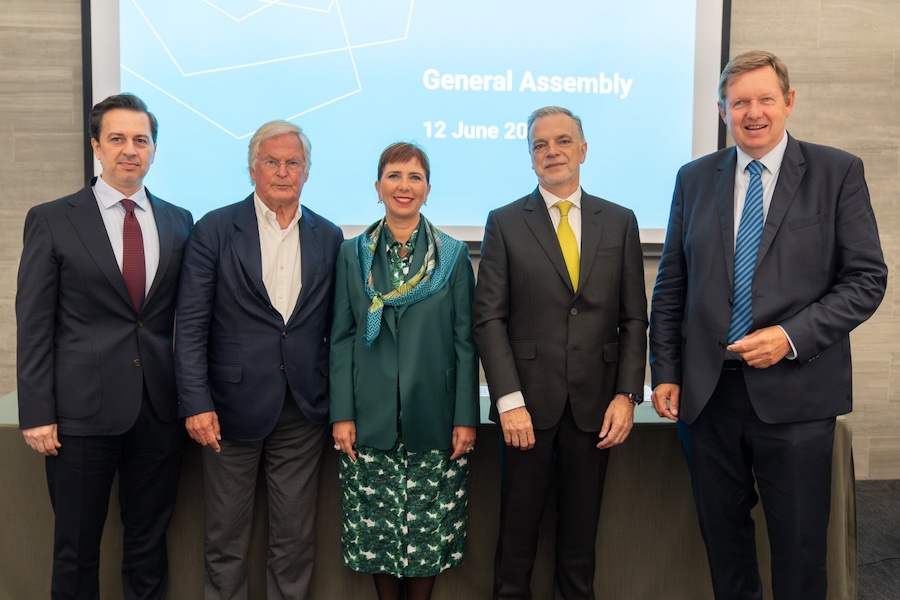
The General Assembly of EURATEX has re-elected Mario Jorge Machado as President, reaffirming its confidence in his leadership as the European textile and clothing industry navigates a period of economic and regulatory challenges.
The sector continues to face rising production costs, intense global competition and growing pressure to adapt to sustainability and digital requirements. Against this backdrop, EURATEX has entrusted Machado with another mandate to represent and support the interests of the industry across Europe.
Mario Jorge Machado holds a degree in Production Polymer Engineering from the University of Minho and brings decades of industrial experience to the role. Throughout his career, he has been actively involved in promoting competitiveness, industrial development and sustainable growth within the textile sector.
Following his re-election, Machado outlined the priorities that will guide his new term.
“My priority for this new mandate is clear: to strengthen the competitiveness of our industry, ensure that the same rules apply to all products sold in Europe, and support our companies through the green and digital transition. Europe must decarbonise its industry, not deindustrialise it,” he said.


Competitiveness Remains a Key Priority
For Machado, competitiveness remains the foundation of a strong European textile industry. He has consistently argued that businesses need the right conditions to invest, grow and create jobs.
EURATEX will continue advocating for policies that encourage investment in automation, digitalisation, artificial intelligence, skills development and innovation. Particular attention will be given to supporting small and medium-sized enterprises (SMEs), which make up a large share of the European textile and apparel sector.
According to Machado, maintaining competitiveness is essential for attracting investment and ensuring Europe retains a strong industrial base.
Pushing for Fair Competition
Another major focus of the new mandate is ensuring a level playing field for all products sold in the European market.
Machado has repeatedly stressed that products imported into Europe should be subject to the same safety, environmental and consumer protection requirements as those manufactured within the EU.
EURATEX plans to continue calling for stronger market surveillance, improved border controls and better monitoring of products sold through digital platforms. The organization believes these measures are necessary to prevent unfair competition and to ensure that companies complying with regulations are not placed at a disadvantage.
Supporting the Green and Digital Transition
The transition toward a more sustainable and digital textile industry remains a central objective for EURATEX.
Machado believes that sustainability should help strengthen European industry rather than create additional burdens for businesses. He has highlighted the need for practical regulations, affordable energy and targeted support measures that enable companies to adapt successfully.
He has also emphasized the importance of creating stronger demand for sustainably produced European textiles. Measures such as public procurement initiatives and practical transparency tools could help support this goal while remaining manageable for companies to implement.
EURATEX Presidency Team Confirmed
Alongside the re-election of Mario Jorge Machado, the General Assembly also confirmed the EURATEX Presidency Team that will support the organization’s strategic direction during the coming mandate.


The team includes:
- Franz Peter Falke, T+M, Germany
- Barbara Cimmino, Confindustria Moda, Italy
- Ismail Kolunsag, IHKIB, Türkiye
- Grégory Marchand, UIT, France
Together, the leadership team will work to address the challenges facing Europe’s textile and clothing industry while promoting competitiveness, sustainability and fair market conditions across the region.
As the sector continues to adapt to changing market demands and regulatory expectations, EURATEX’s leadership is placing strong emphasis on ensuring that European textile manufacturers remain competitive both at home and in global markets.


