
Senior officials, industry leaders, and sustainability researchers gathered in Dhaka this week to shape what could become a defining policy shift for one of the world’s most important garment industries. The focus: a national strategy to move Bangladesh’s textile and ready-made garments (RMG) sector toward a circular economy model.
The consultation, organized by the United Nations Industrial Development Organization (UNIDO) and Bangladesh’s Ministry of Commerce, brought together voices from government, factory floors, global brands, and research institutions. The event was held under the SWITCH2CE project, co-funded by the European Union and the Government of Finland, with Chatham House as a key research partner.
Why this, and why now
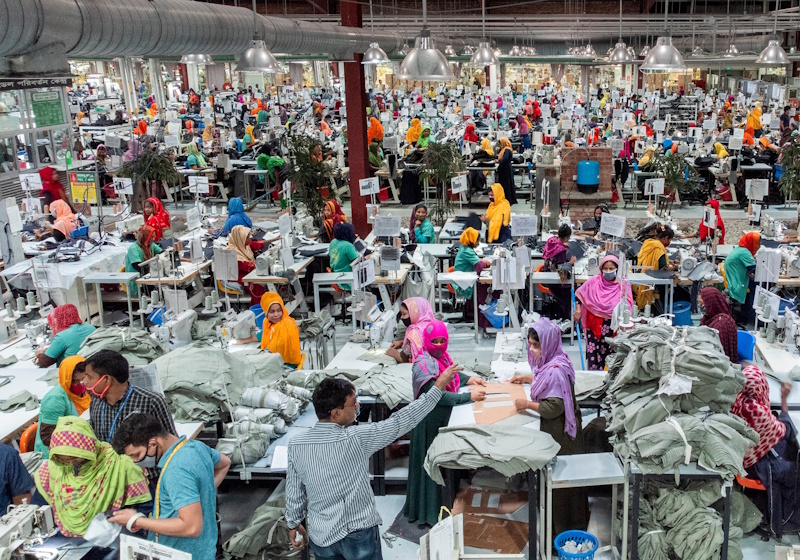
Bangladesh is the world’s second-largest garment exporter. That position comes with enormous economic weight and a significant waste problem. The country generates large volumes of pre-consumer textile waste during production, much of which currently goes unrecycled.
At the same time, Bangladesh is preparing for graduation from Least Developed Country (LDC) status, which will change the trade terms it relies on. The EU its single largest garment market is also tightening regulations around sustainability and supply chain transparency.
“Bangladesh stands at a pivotal moment,” said Abdur Rahim Khan, Secretary (in charge) at the Ministry of Commerce. “Developing and adopting a robust national strategy for circular textiles is not only timely but also essential for safeguarding our competitiveness.”
He added that the government aims to finalize the strategy through stakeholder dialogues and technical review within this year.
What the strategy is meant to do
The draft strategy, covering the period 2026–2031, is designed to create policy conditions that encourage recycling of textile waste, support cleaner production methods, improve traceability across supply chains, and attract investment in newer processing technologies.
Participants at the consultation flagged several practical challenges the strategy needs to address particularly around blended-fiber recycling, which is technically complex and currently a bottleneck for scaling circular textile operations. Transparent supply chains and building financial capacity for smaller manufacturers were also flagged as priorities.
Patrick Schroeder of Chatham House said the strategy would help Bangladesh “stay globally competitive while promoting investment and supporting climate-neutral industrial growth,” noting that the organization and UNIDO are ready to support the Ministry in finalizing the draft.
Pilots already underway
The consultation wasn’t just about policy on paper. Through SWITCH2CE, pilot projects have already been run with major global brands, including BESTSELLER and H&M Group, working alongside Bangladeshi manufacturers. These pilots have tested specific technologies and approaches to increase material reuse and reduce waste in production.
Mark Draeck from UNIDO said the pilots demonstrated what’s possible and made the case for a national policy framework to take things further: “A national circular economy strategy for the textile value chain is essential to maintain and increase the competitiveness of Bangladesh’s RMG sector. Such a framework would provide an important policy signal and enable the scaling of investments in innovative technologies.”
Industry associations signal backing
Three of Bangladesh’s most influential industry bodies – BGMEA, BKMEA, and BTMA showed up and spoke with a consistent message: circular transition is no longer optional.
Their representatives said a coordinated national strategy would allow manufacturers to invest in recycling infrastructure with greater confidence, improve resource efficiency, and respond to evolving demands from international buyers and regulators. The sector appears increasingly aware that what was once framed as a sustainability preference from buyers is becoming a commercial requirement.
EU’s role in the push
The European Union’s delegation in Bangladesh used the event to signal its own interest in the outcome. Hubert Blom, Attaché and Program Manager for Climate Change and Green Inclusive Development at the EU Delegation, said circularity is a priority for Europe both domestically and in its trade relationships.
“As the largest import market for Bangladesh’s garment sector, the European Union is eager to collaborate with Bangladesh to facilitate a circular transition,” Blom said. He pointed to knowledge-sharing, project support, and access to finance as areas where the EU could assist.
The timing is deliberate. New EU regulations on textile sustainability, extended producer responsibility, and supply chain due diligence are changing what it means to be market-ready in Europe. For Bangladeshi exporters, aligning with those expectations is increasingly tied to maintaining market access.
What comes next
Participants broadly agreed on a target of completing the strategy by end of 2026. The Ministry of Commerce has indicated it will continue stakeholder dialogues and technical reviews to finalize the document, and called on private-sector actors to take an active role in implementing it once adopted.
The consultation also reinforced a broader shift in how Bangladesh’s garment sector is positioning itself not just as a low-cost manufacturing base, but as a hub capable of meeting 21st-century expectations around materials, waste, and accountability in production.
Whether the strategy translates into concrete change will depend heavily on how well it bridges the gap between policy intent and the industrial and financial realities facing manufacturers of all sizes across the country.


